Sweetly By and By - On Language Music and Christianity in Choctaw Expression
“The rich tapestry of Choctaw music serves as a profound reflection of the tribe's cultural heritage…Rooted deeply in the traditions of the Choctaw people, this music embodies their struggles, triumphs, and the vibrant narratives passed down through generations. From its origins and evolution influenced by various cultures to its integral role in community ceremonies and storytelling, Choctaw music resonates with the heartbeat of the tribe. Each note and rhythm encapsulates the shared experiences of the Choctaw, reinforcing their bonds and celebrating their heritage.” -USA History Timeline
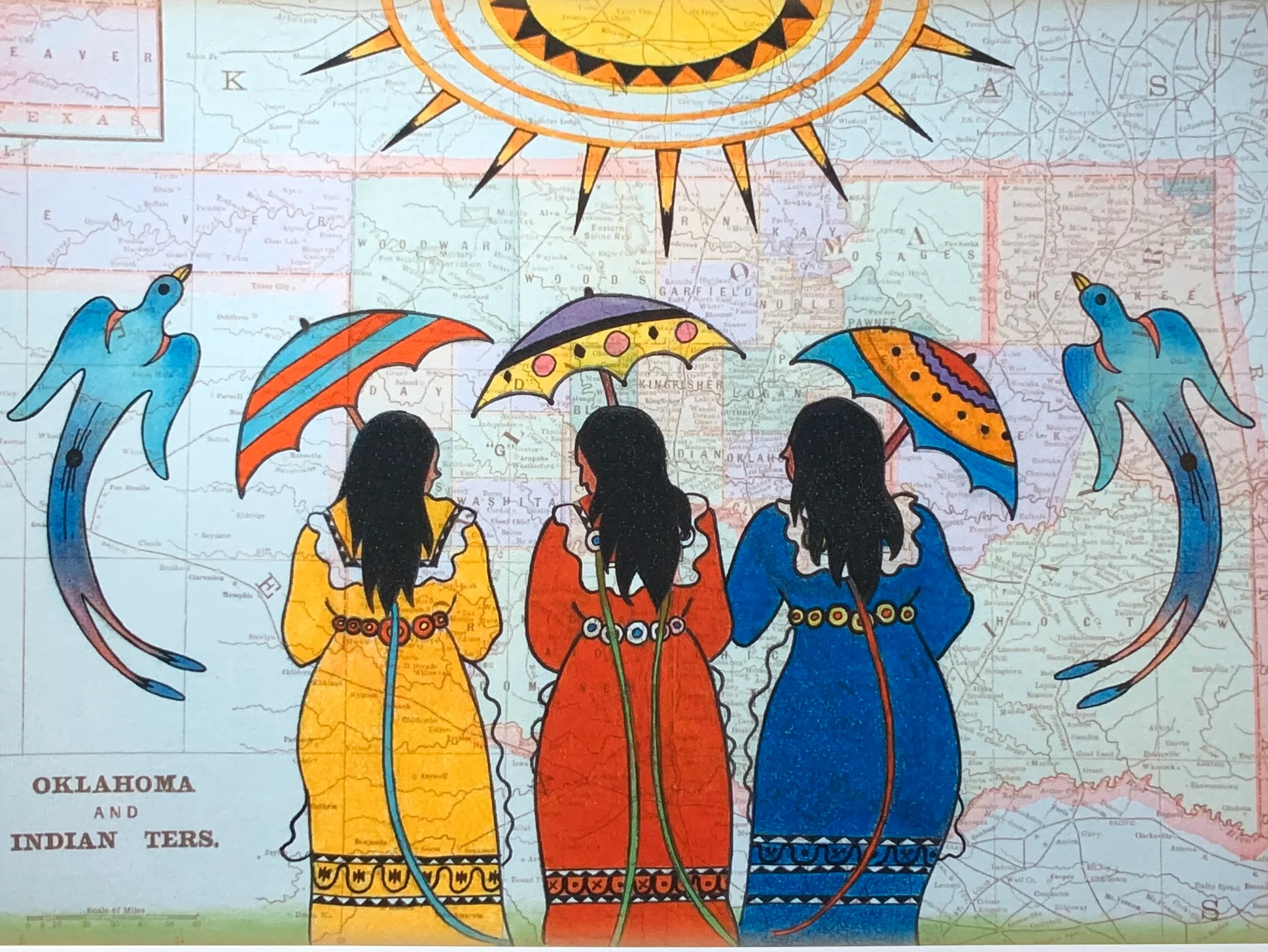
A name is music on its own, in a way. A short melody, sung every so often, but usually at least once a day. The exact combination of sounds your earthly creators have decided equate to who, in essence, you are. This is a key part of why across tribes and regions, Indigenous naming traditions are considered sacred. I was almost called by a different name. My mother thought to name me “Cadence” because of the way she felt me dance throughout my nearly nine months of time within her. It was due to this heavily important deliberation that I went a while without a name upon my birth, being simply referred to as “The baby”. While it is now clear, two decades later, that they settled on the other option and were exactly right in doing so, her assessment of my musical awareness was spot on. Growing up, I bonded individually with both of my parents over the music that they supplied and soon we came to mutually enjoy. By virtue of this, my music taste clearly reflects each influence, heavily highlighting my African American cultural environment as well as religious/gospel tones. There was, however, a specific influence missing. Though I grew up learning about my Afro-Indigenous culture; reading/studying about it within my classical homeschool education and hearing my father recall his grandfather speaking the Choctaw language fluently, but never passing it down due to the stigma around it during his youth growing up in Oklahoma during the 1960’s, I never actually heard the music of my people. Of any indigenous people, in truth, in the media of popular culture. This is largely caused by the fact that many forms of indigenous expression were repressed and suppressed, both legally and sociopolitically, following the European invasion and subsequent colonization of the Americas starting in the late 1500s and early 1600s (Grumet, 1995). But, through various cultural revolutions such as the Civil Rights Movement, there was able to be re-instilled a deep pride in Native American identity and expression. For the Choctaw people, this pride is communicated beautifully in song.
An early and consistent point of reference for this music in my readings was the Choctaw Hymns, which were songs of praise and worship created by tribal elders and religious missionaries who used music as a tool in their efforts of religious conversion (Choctaw Nation of Oklahoma, 2024). However, it was the time from 1965 through to the early 1970s that author focused on, dubbing it a “cultural revival”, and a time during which young adults “began to be stirred by the new indian awareness” both within the Choctaw tribe and throughout the Native American diaspora (Pg #14, Howard, 1997). Mirroring the early Choctaw Hymns, there were formations of “all-Indian” gospel singing groups, as well as the re-indulgence of cultural practices seen through “participating in the pan-Indian powwow complex” and the teaching of war dance. Through observing their own culture at the Mississippi Choctaw Fair, one dance group recruited by Reverend D. Eugene Wilson in Idabel was able to learn these artistic expressions and share them with their church home parish.
Reference list
Choctaw Nation of Oklahoma. (2024). The Long History of Choctaw Hymns with Chantelle Standefer - Choctaw Nation of Oklahoma. [online] Available at: https://www.choctawnation.com/news/native-november/the-long-history-of-choctaw-hymns-with-chantelle-standefer/.
Grumet, R.S. (1995). Historic contact: Indian people and colonists in today’s northeastern United States in the sixteenth through eighteenth centuries. Norman: University Of Oklahoma Press.
Howard, J.H. (1997). Choctaw Music and Dance. University of Oklahoma Press.
usahistorytimeline.com. (n.d.). The Significance of Choctaw Music in Cultural Expression. [online] Available at: https://www.usahistorytimeline.com/pages/the-significance-of-choctaw-music-in-cultural-expression-2d9fa255.php.
